
Pork belly is just that: the belly of the pig and the cut that, once cured, gives us bacon. But it can also be smoked, braised, roasted and even steamed. It has a thick fat cap that when rendered down will flavor, tenderize and keep the thick layer of meat from drying out during the long cooking process. Pork belly needs to be cooked slowly with moderately low heat. It can be tender, juicy and to die for when cooked properly; or it can be dry, tough as a boot and to die from, if not cooked properly.
For my first time making pork belly, I used my Big Green Egg and I was quite pleased with the results, though, as I have remarked in other smoked meat experiments, my inclination is to under-season. This is better than over seasoning, but both can make or break a dish.
I have a tendency to under season, and an even worse tendency to not measure. All I can say is to not be afraid to be aggressive with the seasoning. The pork belly can take it.
This recipe is dead simple and results in a nice, tender, flavorful and juicy product.
There are a couple of pieces of wisdom I will give you: when selecting your cut of meat, go for a generously thick piece of pork belly that’s 3-4 pounds total. Mine was about 1 3/4 inches thick, with a ratio of fat to meat of about 50-50 in most places. A thicker cut will allow it smoke for a longer period of time and the ratio of fat to meat will keep the meat tender and juicy during the long cook time by allowing that fat cap to slowly render and melt though the meat layer.
The meat will smoke for 4-5 hours, give or take, and you will need to have the ability to keep your smoker at a constant temperature for that long. I use a contraption that Mr. Stone Soup gave me for my birthday this year from Thermoworks: the RFX wireless probe set and the Billows BBQ control temperature set. This worked very well, and once we worked out a couple of kinks, the temperature in the Egg stayed pretty much nailed on the 275* needed for its entire cook. Also, the Egg is a very efficient smoker and allowed us to keep the temperature constant for almost 5 hours without needing to be fed more fuel. This is important because remember: if you’re looking, you’re not cooking.


Smoked Pork Belly
Ingredients
Instructions
-
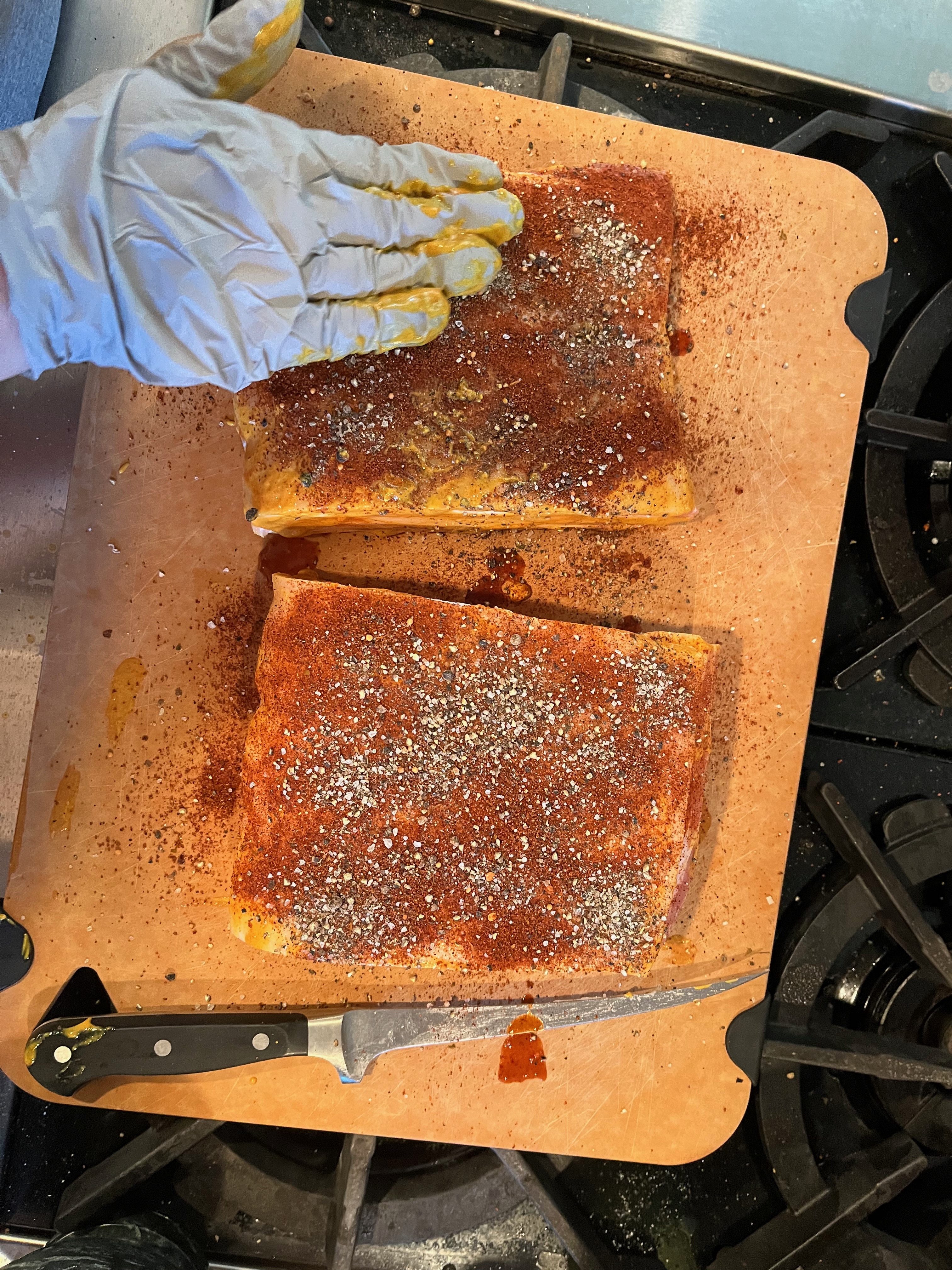
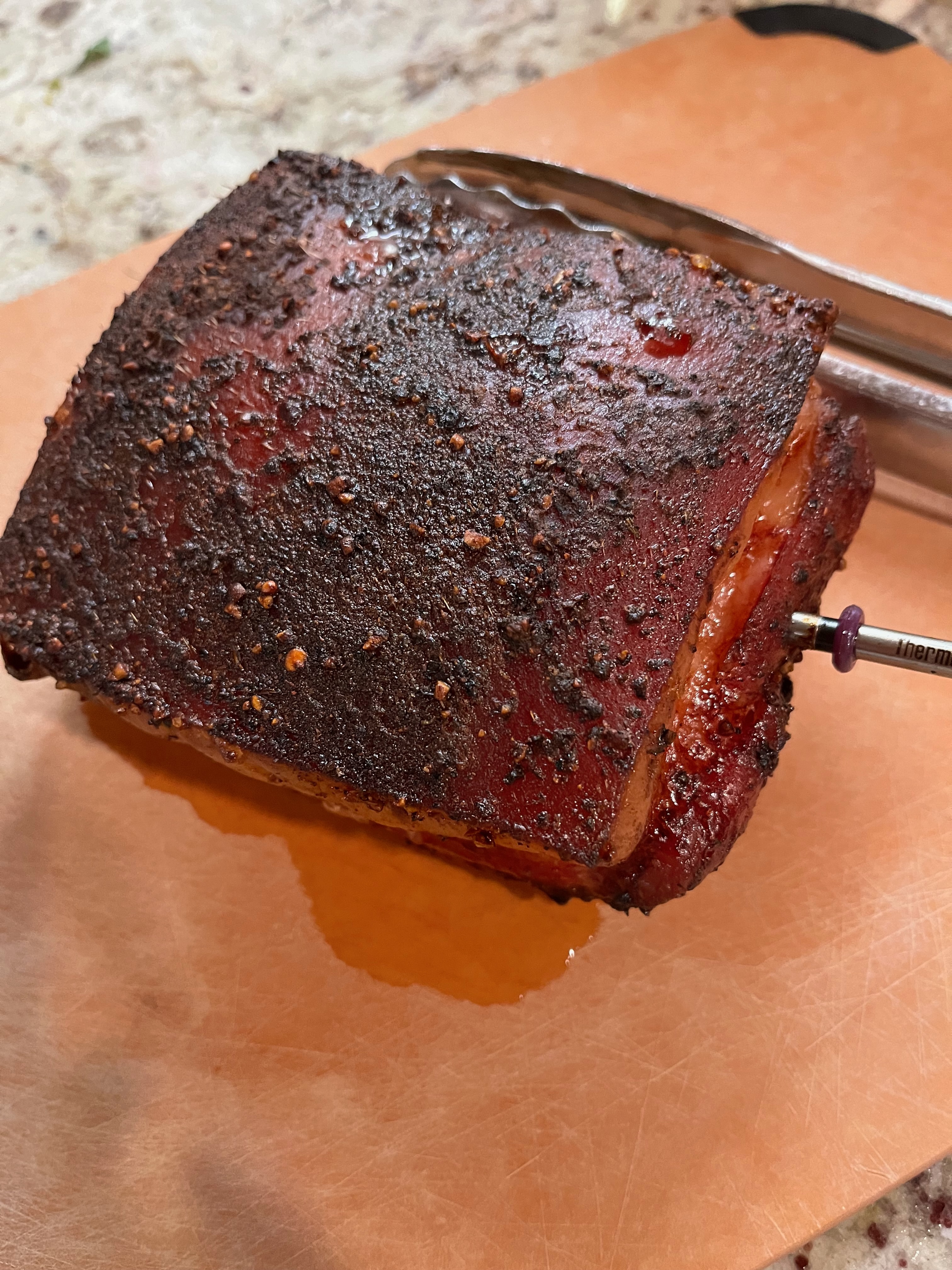
Pre-heat your smoker to 275*. I used regular large FOGO lump charcoal plus a good sized chunk of mesquite, another of hickory and one of apple for my smoke. I made sure the level of fuel was up to the top of lower bucket before stacking my conEGGtor atop it. You will need to maintain the temperature at about 275* through the entire cook; the pork belly will be able to take a slightly higher temperature, but try to keep it as close to 275* as you can. In a mortar and pestle, add the whole black peppercorns and course salt (2-1 proportions pepper to salt; enough to give a nice coating to both sides of your pork belly) and grind the spices until the pepper is coursly cracked and you can still see some flakes in the salt; set aside. Apply enough mustard and hot sauce to the meat to give it a thin coating (this is basically just a coating to allow the dry rub seasonings to have something to stick to, but add more hot sauce if you like your meat a little spicier.) Sprinkle the meat liberally with the dry rub, followed by the salt and pepper mixture from the mortar and pestle. Using your hands, pat the mixture onto the meat and set aside until your smoker is ready to receive the meat. I let my meat rest at this point for about a half an hour, which I think benefitted the overall cook and flavors.
-
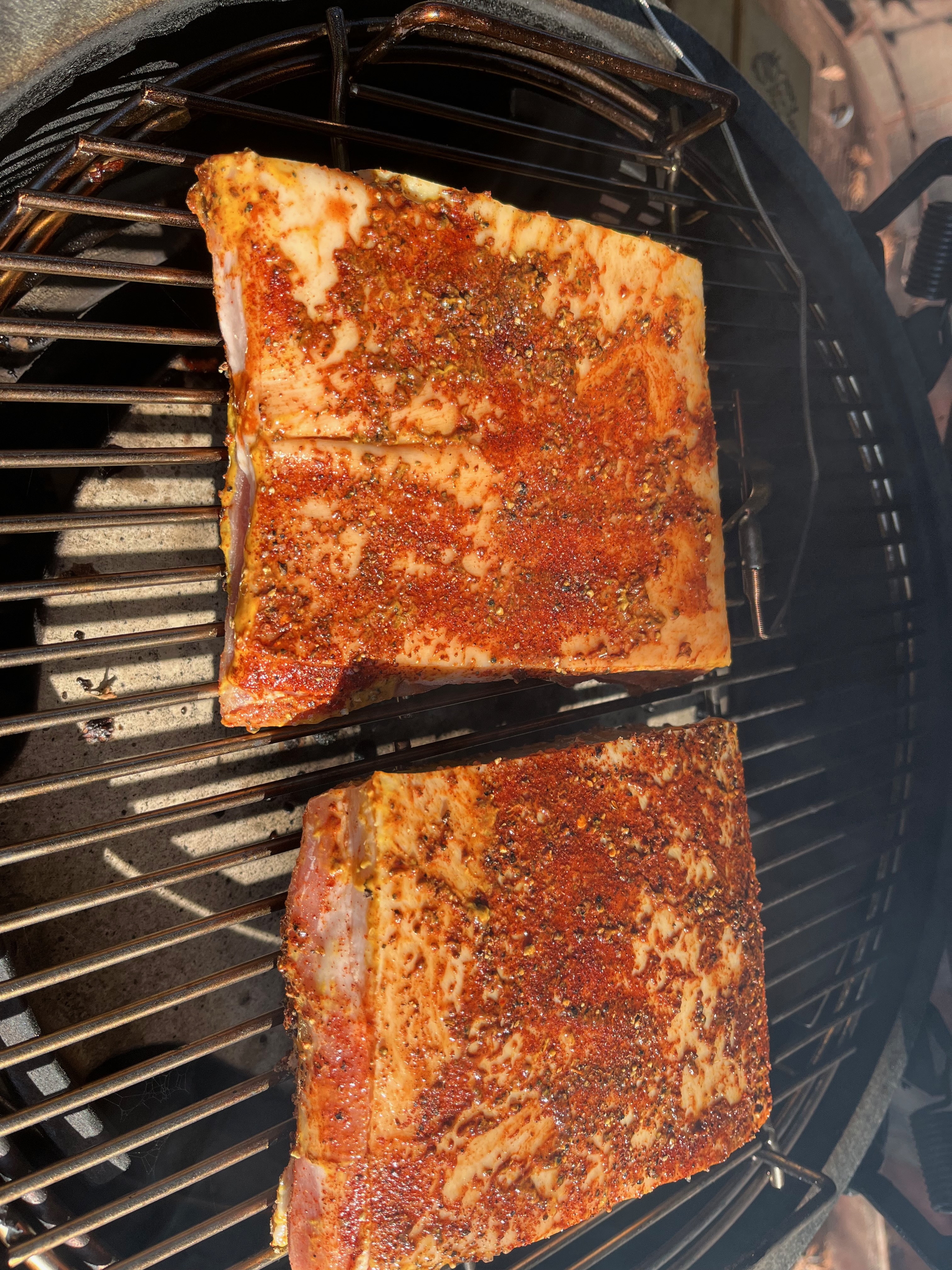
Once the smoker has leveled out in temperature, carefully place the pork belly MEAT SIDE DOWN onto the grill, close the lid and let it smoke for about 2 hours before checking it again. During this time, the fat cap will start to render down and melt into the lower level of meat.
-
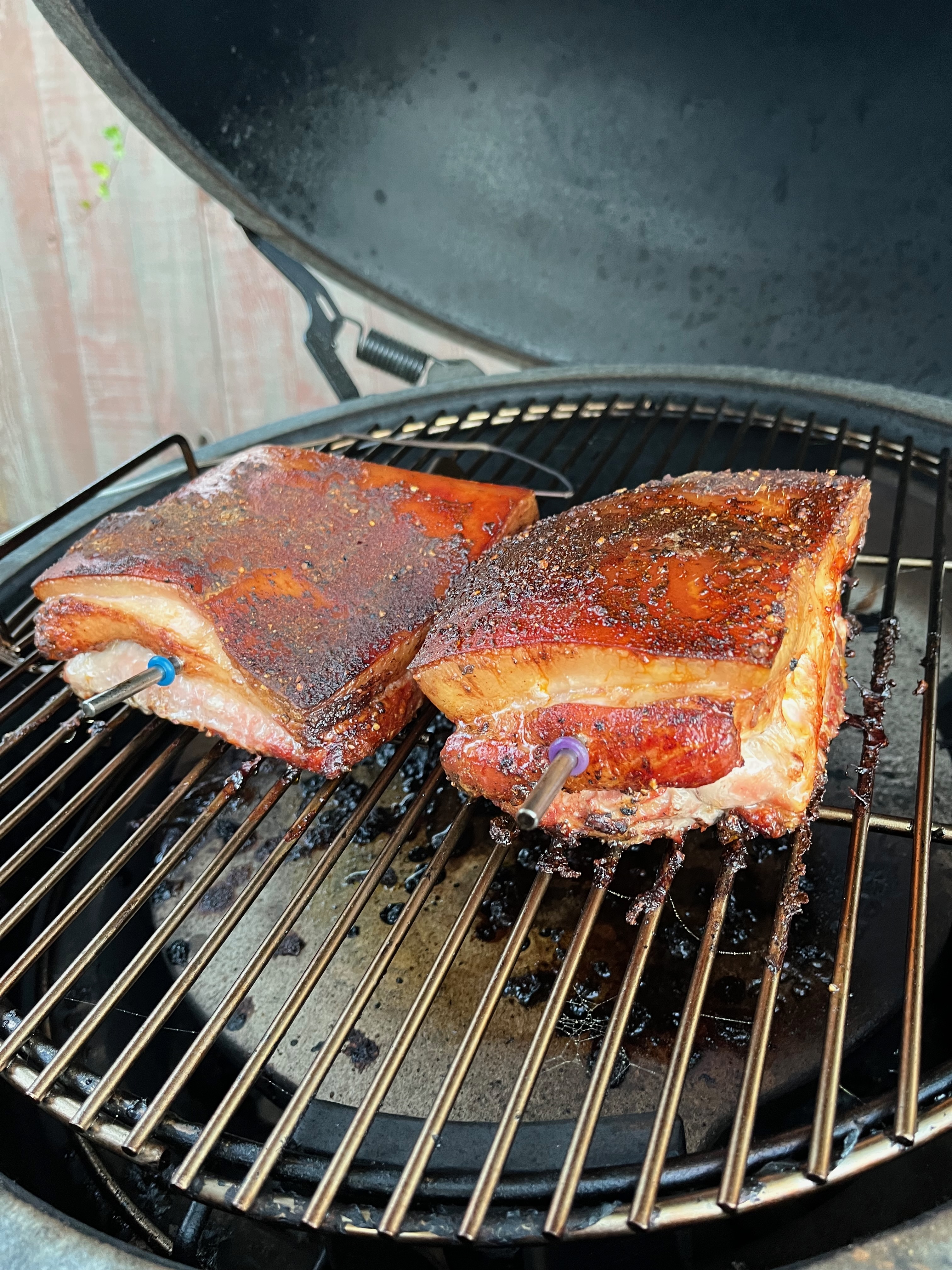
At this point, mix your 50-50 apple cider vinegar and water mixture in a food-grade spray bottle. After two hours, carefully lift the smoker lid (taking care to let it "burp" its excess smoke). At this point, the top fat cap will have started to kind of puff up. If you're using them, this is the time to insert your RFX temperature probes in. This is also the time to spritz the meat with your apple cider/water mixture. Just give it a good misting and then close the smoker again and let it go for another hour. If you're using the temperature probes, you'll be able to monitor the temperature. At this point, my meat was at about 175*. In a long cook like this, the importance of checking the temperature is not so much to make sure that the meat is done (it's going to be cooking at 275* for 4-5 hours, so it's going to get done) it's more to make sure the meat is not drying out because it's cooking too fast.
-
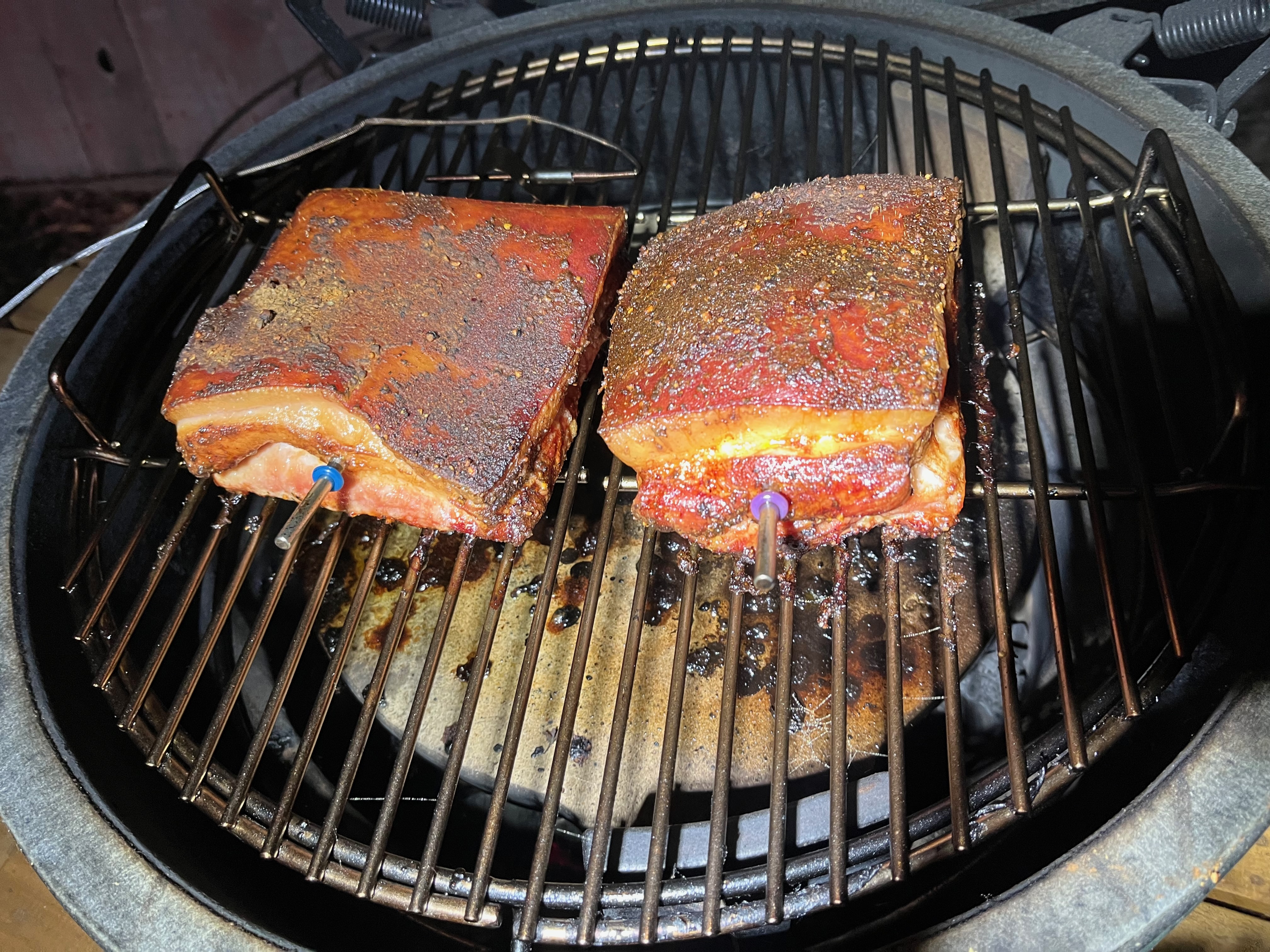
After an hour (you should be at a total smoke time of 3 hours at this point), carefully lift the lid of the smoker again (burping it an needed) and check the temperature of the meat with an instant read thermometer if you're not using the RFX thermometer. At this point you should be somewhere around 185, but don't worry if you're not at that temperature yet--that just means that you'll need to leave the meat on the smoker a little longer. Spritz with the apple cider vinegar again and close the lid. You're looking for a temperature of about 205*, give or take. Depending on how close you are to that temperature will determine how much longer you'll need to smoke. I was able to keep my meat at a near constant 275* throughout the smoke and my 1 3/4" piece of pork bellow took a total of a a little over 4 hours to reach temperature. After about a 20 minute resting period, I was at about 4.5 hours for my total cook time (add in the initial resting period, and it took a total of about 5 hours, so plan accordingly).
-
Once the meat has reached an internal temperature of about 205*, remove from the smoker and let the meat rest for about 20 minutes before slicing to let the meat and fat cap set up a little bit for ease of slicing.
-
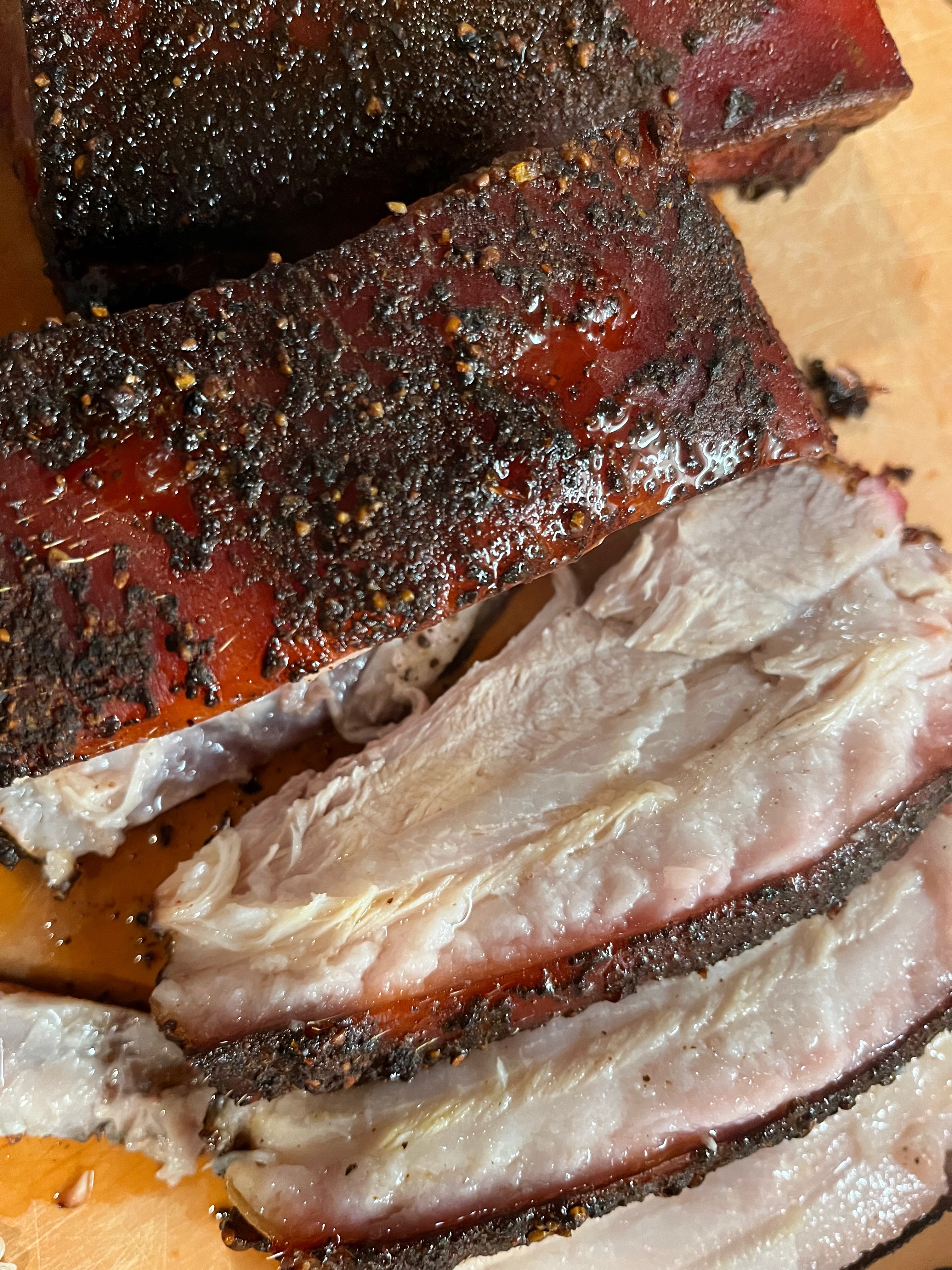
Slice the meat into thick cuts.
-
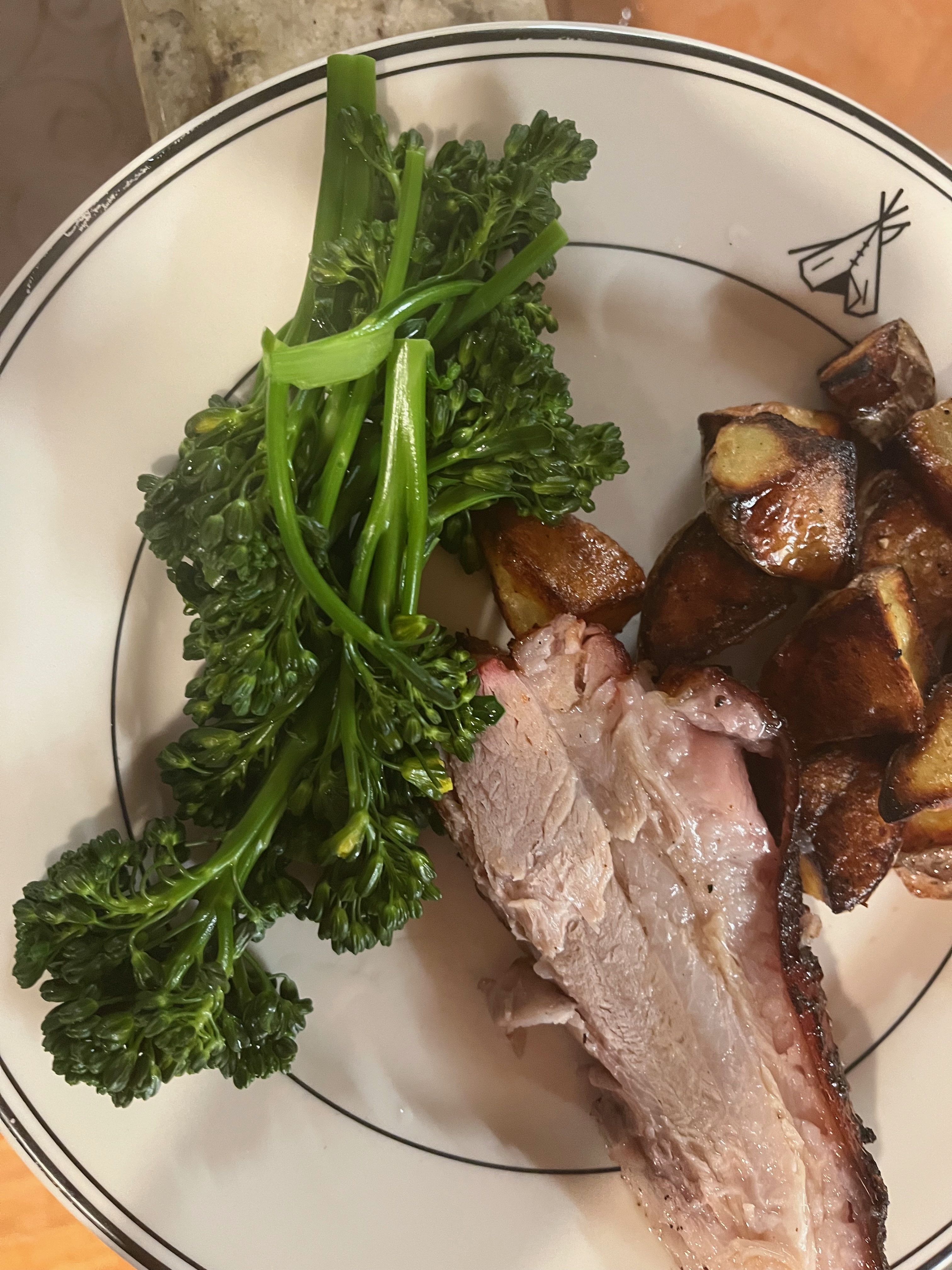
Enjoy with roast potato and your choice of green vegetable.
Note
We enjoyed this meal with a glass of August Briggs Old Vines Zinfandel which had enough spice and body to hold up to the bold flavors in this meal!
