


Focaccia Bread
Ingredients
Instructions
-
In the large bowl of your mixer, dissolve the yeast in the 1/4 cup of warm water. Let sit for a few minutes until it starts to get a little foamy. Add the 2 tbsp olive oil and mix well.

-
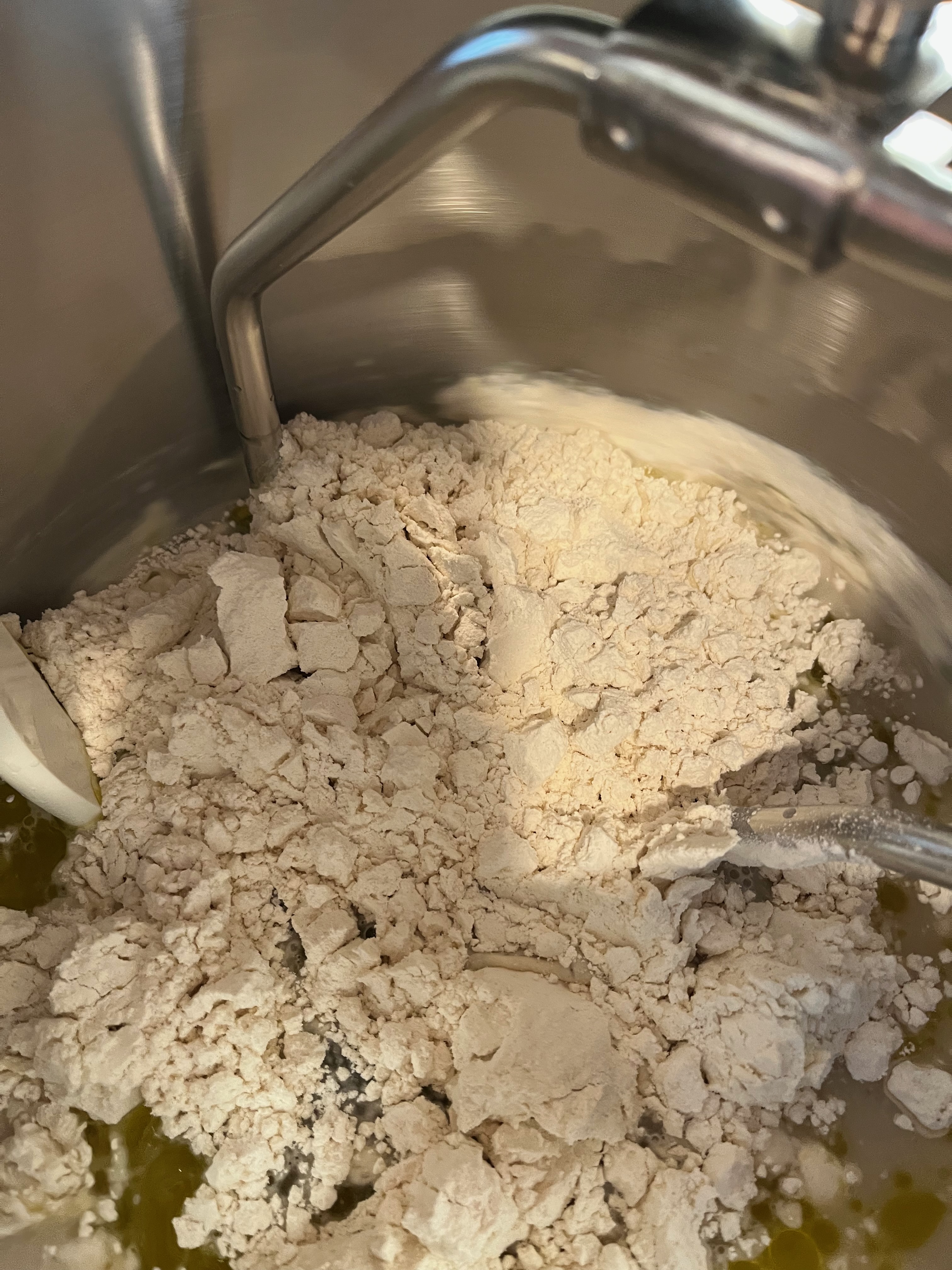
Add the 2 1/4 cups of water, salt and 6 1/2 cups of the flour to the yeast mixture and blend until the mixture starts to form a ball. At that point, if you're not already using your dough hook, switch to that and knead the mixture until the dough turns smooth and elastic. Add more flour as necessary--you want the dough to have a smooth and elastic consistency, but also have a sort of "velvety" texture.
-
transfer the dough to a large bowl oiled with very good quality olive oil. Cover with plastic wrap and put into a draft-free, slightly warm place to rise for about 1 1/2 hours, or until the dough has roughly doubled in size.

-
Remove the dough from the oiled bowl and, using a bench scraper, cut the dough into either two or three pieces, depending on whether you use three nine-inch containers or two 10 x 15 cookie sheets for your bake. I used one 9-inch round cake pan and 2 9-inch square pans for mine. The trick here is to try to cut them into roughly the same amounts--otherwise, you'll end up with bread that doesn't cook at the same rate. No fair asking me how I know ;-) Place the portioned dough onto a lightly floured cutting board and, using a rolling pin, roll into 9-inch squares or circles or 10 x 15 rectangles depending on your chosen baking pan. Place the dough into olive-oil-oiled pans and place them in a draft-free location, covered with damp dish cloths.

-
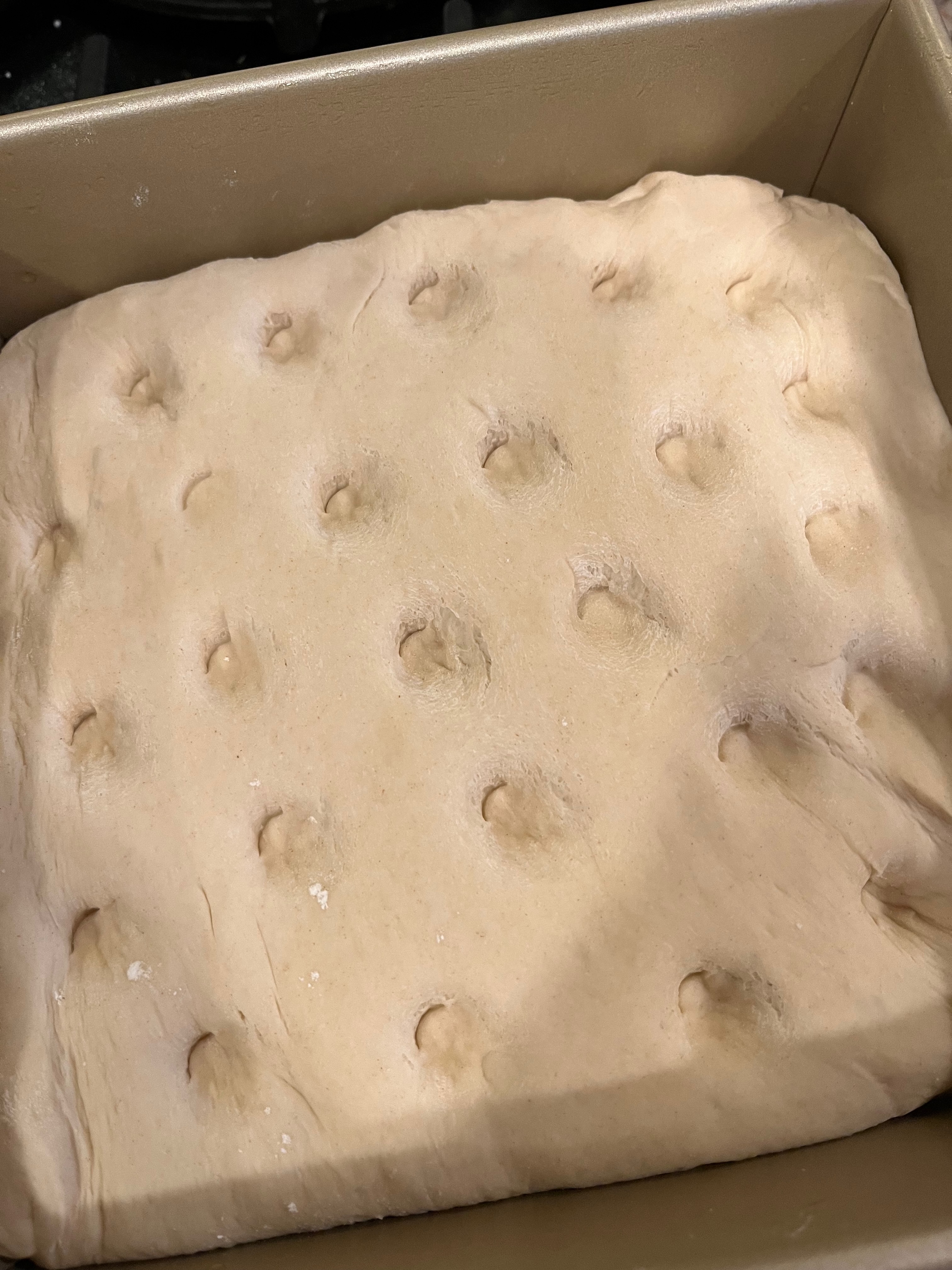
After about 30 minutes, make little indentations in the dough using your forefinger. Place the pans back under those damp dish cloths and let the dough rise another couple of hours, or until they are about doubled in size.
-
About 30 minutes before you plan to bake, pre-heat your oven to 400*.
-
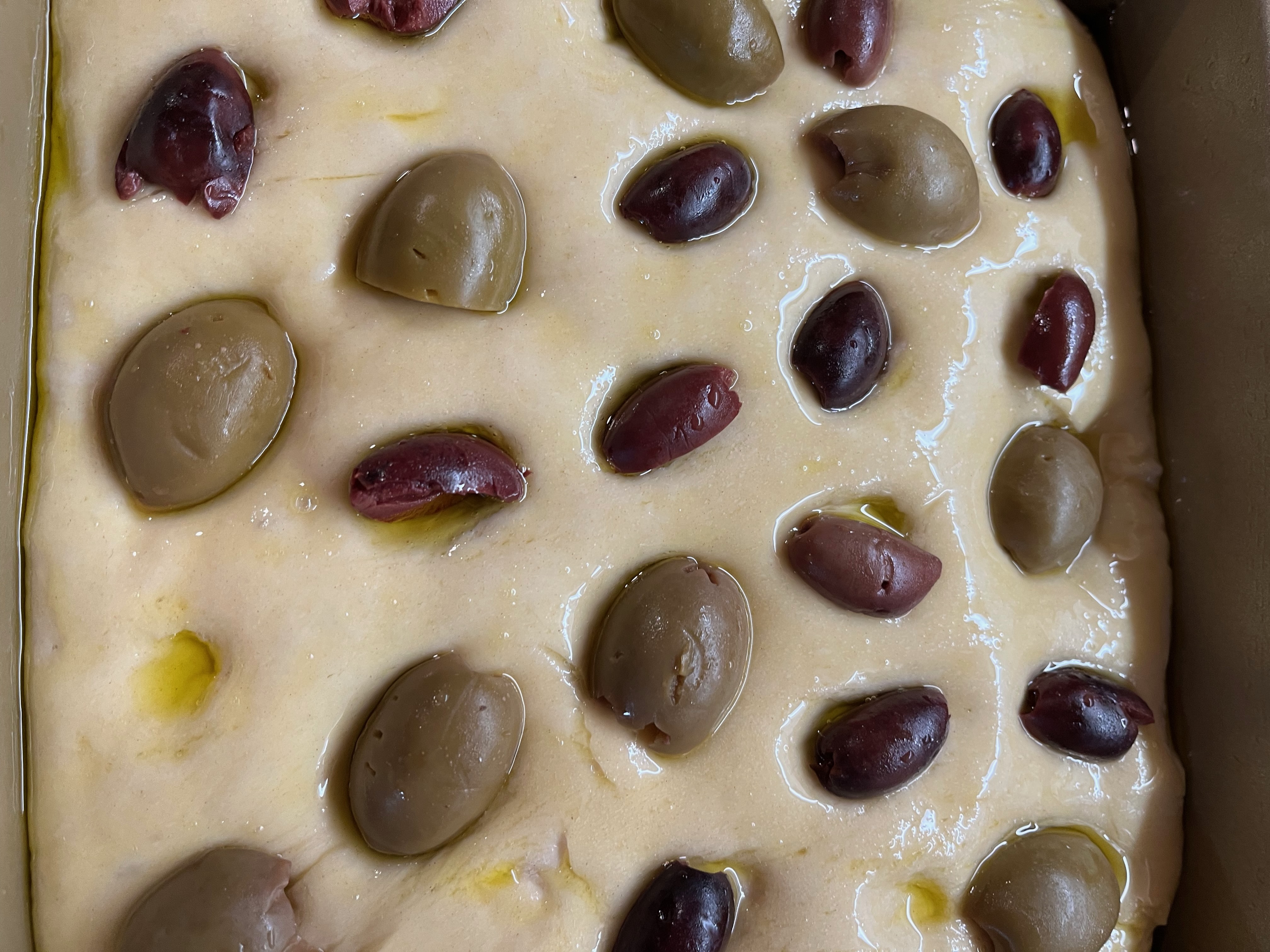
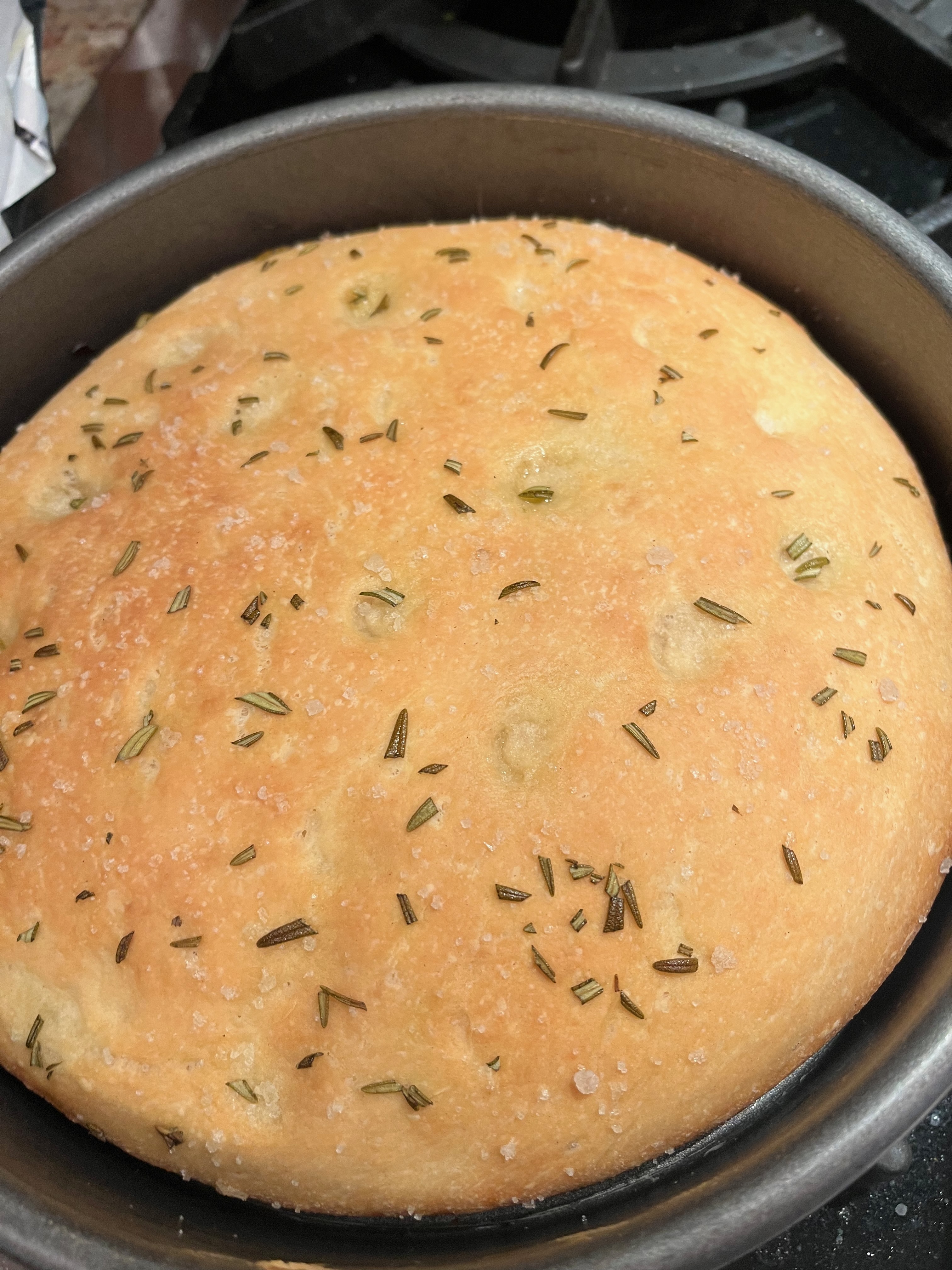
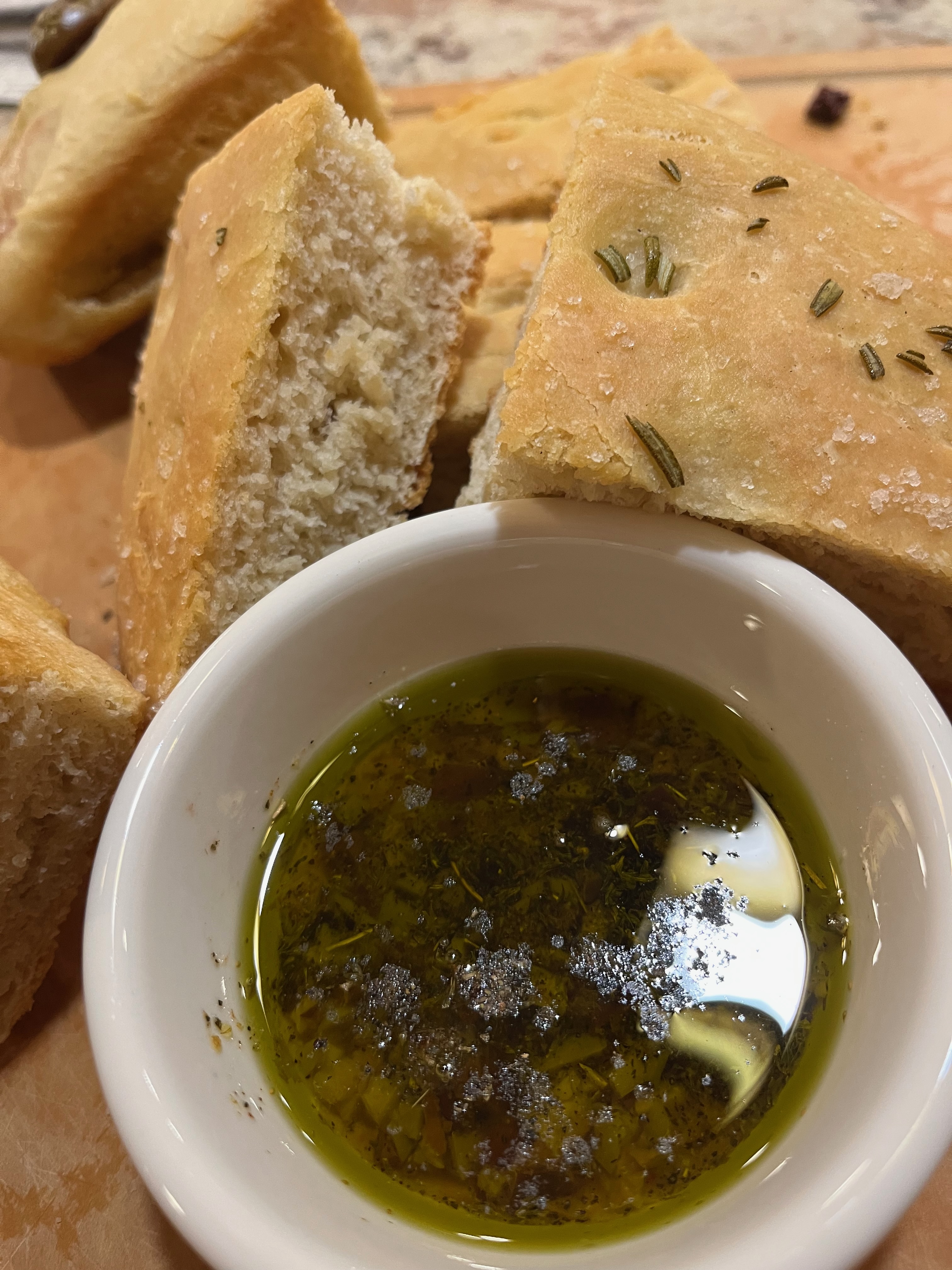
Before baking, uncover the pans and brush the dough liberally with olive oil and add a topping of your choice. I used olives (that I cut in half) for one loaf, olive oil, rosemary and sea salt for another, and olive oil and sea salt for the last one.
-
Spray liberally with water and place the pans into the pre-heated oven.

-
Check in on your loaves after about 20 minutes--if you're like me, one of your loaves will be golden brown, but the others will need a little more processing. Be sure not to overcook the bread b/c it can come out kind of dry if you're not careful.
-
This bread was easy to make and it was quite serviceable, especially with a little dip of very good quality olive oil, some finely chopped olives, a little herbs de Provence, some salt and a little vinegar.
Note
Keri's notes: this is not my dream focaccia bread, but it was pretty easy to put together and with a little dip, as mentioned in the instructions, it was quite good on the first night. The next day, however, it was quite dried out. All was not lost--I made very serviceable croutons out of the leftovers. But I am still toiling away at my quest for the perfect focaccia. Be patient with me!
Here's another note: I got one of those olive oil spray bottles and used it for spraying the loaves with water. It also served as a dandy way to create "damp" dishtowels that so many recipes so casually instruct you to use. With the spray bottle, it was possible to achieve "damp" without it being "wet."
If you follow me, you know that I advise using very high quality, fresh olive oil and I can't stress that enough for this recipe. The olive oil here is critical, because so much of the flavor depends on the olive oil. If it's off, the bread will be dreadful. Same with the olives if you're going to use olives as a topping. The better the quality, the better the bread!
